Written by the [Procure Aqui] Editorial Team | Last updated: July 2026
Mesothelioma is a rare and aggressive cancer, almost always caused by exposure to asbestos, often decades before symptoms appear. Because the link between asbestos and this disease has been documented for so long, many companies that manufactured or used asbestos-containing products knew about the risks and failed to warn workers. This is the reason mesothelioma lawsuits exist, and why they tend to result in substantial compensation for victims and their families.
This guide explains how these lawsuits work, who can file one, what compensation typically covers, and what the process generally looks like from start to finish.
Why Mesothelioma Lawsuits Are Different From Other Personal Injury Cases
Most personal injury cases involve a single incident, like a car accident or a fall. Mesothelioma cases are different because the exposure that caused the illness often happened 20 to 50 years before diagnosis, frequently at a job site, in the military, or through secondhand exposure from a family member who worked with asbestos.
Because of this long latency period, courts and legal teams have to reconstruct someone’s work and exposure history from decades earlier, often across multiple employers, job sites, and products. This is why mesothelioma law has developed into its own specialized area, with law firms that focus almost exclusively on these cases and maintain extensive databases of asbestos-containing products and the companies that made them.
According to the CDC, the estimated median time between a worker’s first occupational asbestos exposure and death from mesothelioma is around 32 years, which explains why cases diagnosed today often trace back to jobs held in the 1970s, 80s, or 90s. The disease remains rare but persistent: roughly 2,500 to 3,000 new cases are diagnosed in the U.S. each year, and men account for a large majority of them, largely reflecting historical employment in high-exposure industries like shipbuilding, construction, and manufacturing.
Who Can File a Mesothelioma Claim
Generally, three groups of people may be eligible to file:
Individuals diagnosed with mesothelioma who can show they were exposed to asbestos through their occupation, military service, or environment.
Family members of workers who were exposed secondhand, often called “take-home exposure,” such as a spouse who washed a worker’s asbestos-covered clothing for years.
Surviving family members of someone who has passed away from mesothelioma, who can file a wrongful death claim on the deceased person’s behalf.
Occupations historically associated with high asbestos exposure include shipyard workers, construction workers, industrial and factory workers, power plant employees, firefighters, and military veterans, particularly those who served on Navy ships built before the 1980s. Industry data suggests roughly a third of all mesothelioma cases trace back to Navy service or shipyard work specifically, and secondhand or non-occupational exposure, such as a family member washing a worker’s contaminated clothing, is estimated to account for close to half of asbestos-related claims filed today.
Two Main Legal Paths: Lawsuits and Trust Fund Claims
There are generally two ways someone can pursue compensation, and many cases involve both.
Personal injury or wrongful death lawsuits
These are filed directly against companies that are still operating and are found to have manufactured, sold, or used asbestos-containing products negligently. These cases can go to trial, though the majority settle beforehand.
Asbestos trust fund claims
Because so many asbestos manufacturers filed for bankruptcy due to the sheer volume of lawsuits against them, many were legally required to set up trust funds specifically to compensate current and future victims. There are more than 60 active asbestos trust funds in the United States, and industry tracking suggests thousands of new mesothelioma and asbestos-related lawsuits are still filed nationwide every year. Filing a trust fund claim is often faster than a lawsuit, since it doesn’t require going through full litigation, though the compensation formulas are more standardized.
A specialized mesothelioma attorney will typically evaluate which combination of lawsuits and trust fund claims applies to a specific work and exposure history.
What Compensation Typically Covers
Settlements and verdicts in mesothelioma cases tend to be significant, often reflecting the severity of the diagnosis and the long-term negligence involved. Compensation generally accounts for:
- Medical expenses, including treatment, surgery, and ongoing care
- Lost income and, in cases involving a shortened life expectancy, loss of future earning capacity
- Pain and suffering
- Travel expenses for specialized cancer treatment centers, since mesothelioma specialists are concentrated in a limited number of hospitals nationally
- Wrongful death damages for surviving family members, in cases where the patient has passed away
Because these cases often involve multiple defendants, a single claim may result in several separate settlements from different companies found responsible for different points of exposure.
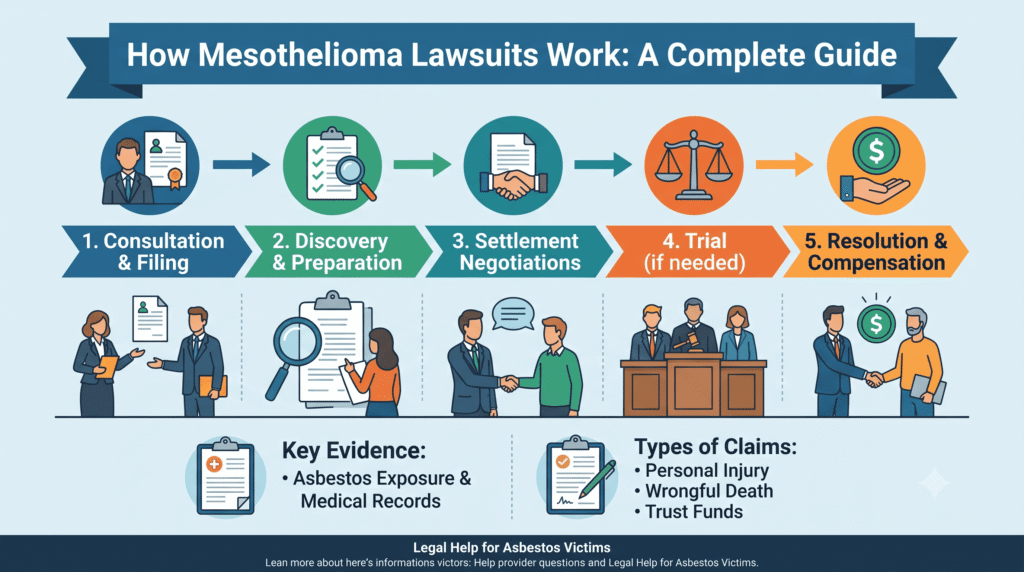
What the Process Typically Looks Like
Initial consultation and case evaluation. A mesothelioma law firm reviews medical records and work history, often at no cost, to determine whether a viable claim exists.
Exposure investigation. The legal team works to reconstruct the person’s occupational and product exposure history, sometimes using specialized databases that map asbestos use to specific job sites and time periods.
Filing the claim. Depending on the findings, the firm files lawsuits against still-operating companies and claims against relevant trust funds simultaneously.
Discovery and negotiation. Most cases settle during this stage, as defendants and their insurers negotiate rather than risk a trial verdict, which juries in asbestos cases have historically found in favor of plaintiffs at a high rate.
Trial, if necessary. A smaller portion of cases proceed to trial, usually when a defendant disputes liability or the settlement offer is considered too low relative to the damages.
Given the aggressive nature of mesothelioma, many law firms prioritize these cases and can move faster than in typical personal injury litigation, sometimes securing initial settlements or trust fund payouts within months rather than years.
How Attorney Fees Work
As with most personal injury cases, mesothelioma attorneys typically work on a contingency fee basis, meaning there are no upfront legal costs. The fee, generally a percentage of the final settlement, is only collected if the case results in compensation. Given the specialized nature of this litigation, it’s worth confirming during a consultation whether the firm has direct experience with the specific trust funds and companies relevant to your exposure history.
Questions Worth Asking an Attorney
- How many mesothelioma cases has your firm handled, and what were typical settlement ranges?
- Do you have direct experience filing claims with the trust funds relevant to my work history?
- How long do you expect the process to take, given my specific diagnosis and exposure history?
- Are there statute of limitations concerns I should be aware of, given how long ago the exposure occurred?
Statutes of limitations for these cases vary significantly by state and typically start counting from the date of diagnosis rather than the date of exposure, which is an important distinction given how long mesothelioma takes to develop.
Final Thoughts
Mesothelioma lawsuits exist because of decades of documented negligence by companies that knew about asbestos risks and failed to protect workers. For patients and families navigating a diagnosis, understanding that compensation, sometimes substantial and from multiple sources, is available can make an important difference during an already difficult time. A specialized consultation, which is typically free, is generally the fastest way to understand what options apply to a specific case.
This article is for general informational purposes only and does not constitute legal or medical advice. Laws and trust fund eligibility vary by state and case. Consult a licensed attorney specializing in asbestos litigation to discuss your specific situation.
Sources:
- Centers for Disease Control and Prevention (CDC) — occupational asbestos exposure and mesothelioma mortality data
- U.S. Environmental Protection Agency (EPA) — asbestos regulation and exposure risk guidance
- National Cancer Institute — asbestos exposure and cancer risk overview
-------------
INFORMAÇÃO IMPORTANTE!
**Não recrutamos ninguém, as vagas aqui anunciadas pertencem aos anunciantes**.
No Procure Aqui, você encontra muito mais do que dicas para o seu crescimento profissional. Descubra vagas de emprego e comece a sua nova jornada agora mesmo!
-------------
Tags:emprego em Angola 2026, vagas de emprego em Luanda, emprego offshore Angola,concurso público Angola 2026, vagas sem experiência Angola, Estágio Remunerado, Sector Petrolífero, admissão função pública Angola
Clique aqui para ver outras vagas | Clique aqui para ver artigos para a sua carreira vagas